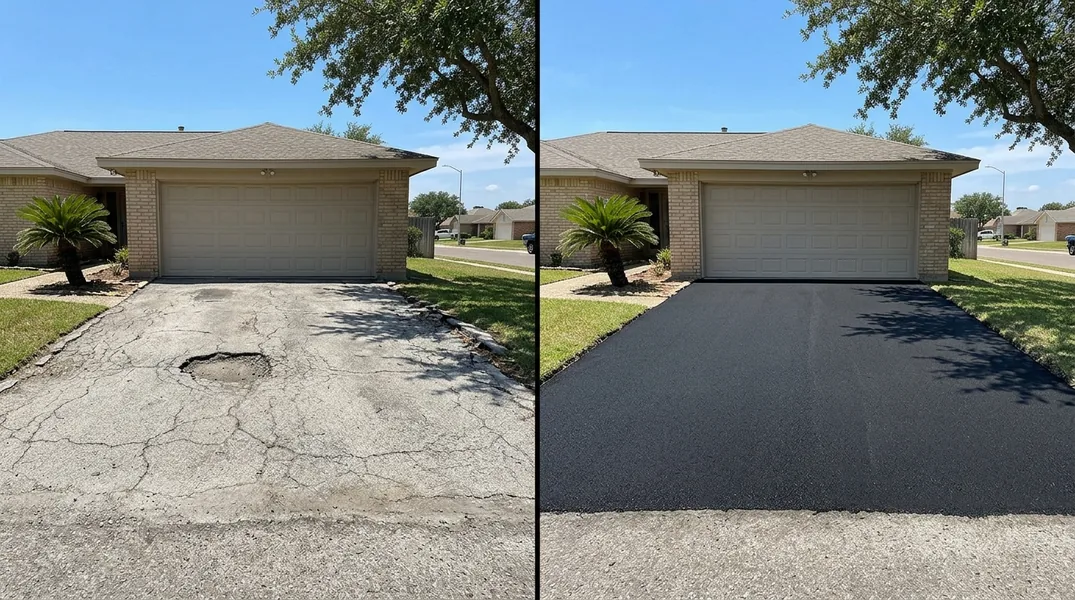
When Should You Repair vs. Replace Your Driveway?
One of the most common questions homeowners in Corpus Christi ask is whether their deteriorating driveway needs a quick fix or a complete overhaul. The answer depends on several factors, including the extent of damage, the age of your asphalt, and your long-term budget. Understanding the difference between repair and replacement can save you money and prevent safety hazards on your property.
If your driveway has only minor cracks, small potholes, or surface-level wear, Driveway Repair is typically the most cost-effective solution. Localized damage like this can usually be addressed through targeted fixes that extend the life of your existing asphalt by several years. However, if your driveway is showing widespread cracking, large sections of deterioration, or is more than 15 to 20 years old, replacement or Asphalt Resurfacing & Overlay may be the smarter investment. A professional inspection from Corpus Christi Asphalt Paving can help you determine the best path forward for your specific situation.
Understanding Asphalt Curing: How Long for Asphalt to Cure
Many homeowners don't realize that new asphalt doesn't reach full strength immediately after installation. The curing process is a critical phase that affects how well your driveway will perform over time. Understanding how long for asphalt to cure helps you plan your driveway use and protects your investment in Asphalt Driveway Paving & Installation.
Fresh asphalt typically requires 24 to 48 hours to cure enough for light foot traffic, but the full curing process can take up to six months. During the initial curing phase, the asphalt is still relatively soft and susceptible to damage from heavy vehicles, sharp objects, and even extreme heat. In the Corpus Christi climate, where summer temperatures soar, your new asphalt may cure slightly faster than in cooler regions, but patience is still essential. The longer you allow your driveway to cure properly, the stronger the bond between the asphalt layers, which translates to better durability and a longer lifespan for your investment.
How Long Before You Can Drive on New Asphalt?
This is one of the most frequently asked questions from homeowners eager to use their newly paved driveways. The short answer is that you should wait at least 48 hours before driving on new asphalt, but the complete answer is more nuanced. Factors like ambient temperature, humidity, and the thickness of your asphalt layer all influence how long before you can drive on new asphalt safely.
During the first 48 hours, the asphalt surface will harden enough to support light vehicle weight, but it hasn't reached full strength. Driving on it too early can create ruts, depressions, or surface damage that compromises the integrity of your driveway. In the warm climate of Corpus Christi, the curing process may accelerate slightly, but this doesn't mean you should rush to use your driveway. After the initial 48-hour period, you can drive on it for normal daily use, but avoid parking heavy vehicles in the same spot for the first week or two. Ideally, wait a full week before parking boats, RVs, or other heavy equipment on your new asphalt to ensure maximum strength and prevent permanent damage.
New Asphalt Driveway Care: Essential Maintenance Tips
Proper care during the first year of your new asphalt driveway is crucial for maximizing its lifespan and protecting your investment. New asphalt driveway care goes beyond just avoiding heavy traffic during the curing phase. Once your driveway has fully cured, you'll need to establish a maintenance routine that keeps your asphalt in excellent condition for years to come.
One of the most important aspects of new asphalt driveway care is keeping the surface clean and free of debris. Leaves, dirt, and organic matter can trap moisture against the asphalt, leading to premature deterioration. Additionally, you should avoid spilling gasoline, oil, or other harsh chemicals on your driveway, as these substances can break down the asphalt binder. During the first year, monitor your driveway for any small cracks or signs of damage and address them promptly. Small issues are much easier and less expensive to fix than large-scale problems that develop over time. Finally, plan to seal your driveway within the first year of installation, which brings us to our next important topic.
How Often to Seal Driveway: A Maintenance Schedule for Corpus Christi Homeowners
Seal coating is one of the most effective ways to protect your asphalt investment and extend its lifespan significantly. Understanding how often to seal driveway is essential for homeowners who want to avoid costly repairs down the road. In the harsh Texas climate, where UV rays, salt air, and temperature fluctuations are common, regular seal coating becomes even more critical for maintaining your driveway's appearance and structural integrity.
Most experts recommend seal coating your asphalt driveway every two to three years, though the exact frequency depends on your local climate and traffic patterns. For homeowners in Corpus Christi, the combination of intense summer heat and proximity to the coast makes seal coating particularly important. The first seal coat should be applied within 12 months of installation, before the asphalt begins to oxidize and fade. After that initial application, plan for resealing every two to three years to maintain optimal protection. A fresh seal coat not only protects your asphalt from water infiltration, UV damage, and chemical spills but also enhances the appearance of your driveway, keeping it looking dark and well-maintained. If you're unsure about the right seal coating schedule for your specific driveway, the team at Corpus Christi Asphalt Paving can provide professional guidance tailored to your property's needs.
Signs Your Driveway Needs Professional Attention
Knowing when to call a professional is key to preventing small problems from becoming major expenses. Several warning signs indicate that your driveway needs professional evaluation from experienced paving contractors. These include widespread cracking patterns that resemble alligator skin, significant potholes, sunken or uneven sections, water pooling in certain areas, and visible deterioration of the asphalt surface. If you notice any of these issues, don't delay in seeking professional help, as they tend to worsen quickly, especially in the warm, humid climate of Corpus Christi.
The good news is that many driveway problems can be addressed through targeted solutions like Pothole Repair & Asphalt Patching or seal coating before they require a complete replacement. A professional inspection can determine whether your driveway can be restored with repairs or if resurfacing is the better option. Corpus Christi Asphalt Paving offers free consultations to assess your driveway's condition and recommend the most cost-effective solution. Contact us at (361) 371-4726 or visit our website to schedule your free estimate today. Taking action early can save you thousands of dollars in the long run and keep your driveway safe and attractive for years to come.
Looking for a professional asphalt paving contractor in Corpus Christi? Corpus Christi Asphalt Paving responds fast for all your asphalt paving needs.
Get a Free Quote